Retail Investors vs Algorithms: The Coming Extinction

AheadFin Editorial
Key Takeaways
- Over 60% of trades are now executed by algorithms, reshaping investment strategies.
- By 2030, algorithmic trading could account for 80% of market activity, sidelining retail investors.
- Traditional buy-and-hold strategies may become obsolete in an AI-driven market landscape.
Retail investors are about to become the dinosaurs of the financial world.extinct and left behind. Observing the seemingly innocuous rise of algorithmic trading platforms and AI-driven investment strategies, one might dismiss this as just another Wall Street trend. Yet, the implications of this shift are profound, especially for those still clinging to traditional buy-and-hold strategies.
The Signal: Changing Tides in Investment Strategies
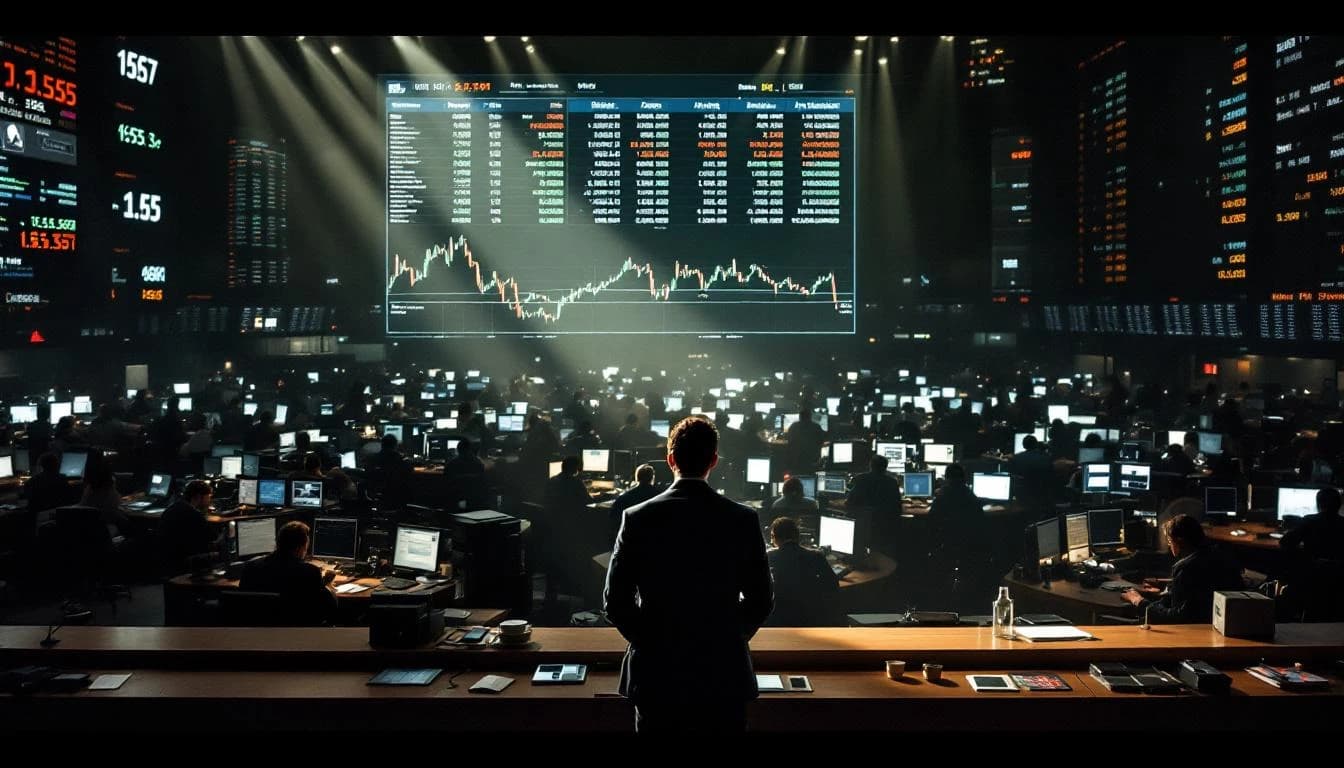
The increasing prevalence of algorithmic trading has gone largely unnoticed by many retail investors. Recent data from the World Federation of Exchanges indicates that over 60% of all trades in leading stock exchanges like the NYSE and NASDAQ are now executed by algorithms. These intelligent systems, designed to capitalize on patterns and inefficiencies at breakneck speed, are redefining the environment of investment strategies.
The VIX, commonly known as the "fear index," has been displaying unusual behavior recently, exhibiting less volatility than anticipated despite numerous geopolitical tensions and economic uncertainties. This anomaly signals the increasing impact of algorithmic trading, which smoothens volatility by reacting to market shifts with calculated precision. “So what?”, some might say. Here's why it matters.
Traditionally, market volatility has been a double-edged sword for investors, presenting both risks and opportunities. While many retail investors view turbulence with trepidation, sophisticated algorithms view it as fertile ground for harvesting returns. As these algorithms become more prevalent and sophisticated, the traditional investor might find their strategies increasingly irrelevant.
The Amplification: A Look Towards 2030
Projecting forward a few years, the ascendancy of machine learning and artificial intelligence in finance will likely result in further marginalization of retail investors. Imagine a world where the S&P 500 index is not the benchmark, but rather an anachronism. As large firms take advantage of rapid data processing and real-time decision-making algorithms, they will shape the markets in their favor, leaving human decision-making processes floundering.
Consider this: by 2030, algorithmic trading could potentially represent upwards of 80% of all market activity, according to projections from financial technology research firms. This will not just change who holds the power but will also redefine how markets react and what strategies yield success. Back in 2008, during the financial crash, human emotion played a significant role in market dynamics. As algorithms further dominate, such emotional overreactions may become relics of the past.
Sources
- 1.Retirement PlansInternal Revenue Service
- 2.Consumer Financial ProtectionConsumer Financial Protection Bureau
Want more like this?
One email a week with money tips, new tools, and insights you can actually use.
Delivered every Monday.